Wednesday, May 18, 2016

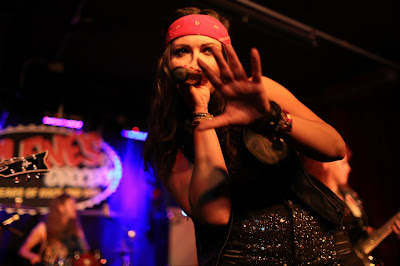
RVBY MY DEAR at Knitting Factory, Interview with Songwriter/Vocalist Gabbi Coenen


Press photo by Luis Ruiz, courtesy of the band

The crowd at Brooklyn’s Knitting Factory on Monday night appears to be mostly musicians in the avant-rock/artpop community, and they all seem to know each other on some level. The band I’m here to see tonight is RVBY MY DEAR, an alternative band that I would put on playlists with CocoRosie and Imogen Heap. The project of singer and keyboardist, Gabbi Coenen, RVBY is a group of New School alumni who originally trained to be jazz musicians. Tonight is the release show for their EP, Unravel. They take the stage following Eda Wolf, a perfect transition from one ambient rock act to the next.

RVBY MY DEAR opens with “10:17,” a number that moves from scintillating keys to rock thick with layers of bass at the nucleus of the sound, a sturdy vehicle for Coenen’s delicate, dreamy vocals. Repetitive lyrics break apart and snap together with the cadence of a Gertrude Stein poem, tempered with a Priscilla Ahn attitude. The second number, “Animal,” features enigmatic drumming that changes pattern swiftly and frequently. There is a youthful quality to Coenen’s voice, a tone that is soft with peaceful longing. She slides up and down melodic hills in “Hidden Threads” with a refracted clarity that teases you into melting into the soundscape, complemented by a piano that moves from major to minor with the ease of improvised dialogue in a film. The song blooms and builds like a hallucination, intensifying and shifting with a suitable pace before gliding back to a gently rippling finish. They slide into “Flourisher,” a punchy pop rock piece that allows guitarist Oscar Rodriguez a little more spotlight with several simple yet potent riffs that sound rather in the classical vein. Set closer “Balloons” finds Coenen’s voice in a wild, bluesy territory that falls nearer to her jazz roots than the other material. There is an evident formula to this music, and a well-crafted one: organically create graceful fervency by growing the sound with mathematical exactitude, then shrink it down to atomic size while maintaining the tension only to blow it up like a star before letting the song quickly dissipate, leaving the listener wanting more.


Gabbi Coenen reached out to Hydrogen Jukebox a few days before the show to tell me about it, and I immediately became excited about this deeply emotive ensemble. The day after the show, we meet at a coffee shop in Williamsburg to talk about RVBY MY DEAR. She tells me that following nearly a lifetime of piano lessons thanks to a supportive and encouraging mother, she found herself finishing a music degree and simultaneously discovering a fondness for composition. While many similar artists pursue solo endeavors, she prefers the balance that comes with a group. “I wanted an outlet for my own music and I liked the idea of having a band…I like having a group of people that I can play with and workshop ideas with.”

Their audio-collage style of blending the euphonic and the distorted, the found sound with the carefully played instrument, is what I find so attractive, and I ask about the writing process. “I write everything on piano…I usually start with music, just chords or a whole song that doesn’t have any lyrics or melodies. I write words separately. I keep books of poetry, ideas jotted down. At some point I try and combine the two. Find some words that fit this music that I’ve written. I’m very inspired by film scores, so when I’m writing the music I keep picturing things and sometimes that informs the lyrics and other times it’s more of a challenge to find words that fit…Usually I’ll write keyboard parts as well and have an idea for the beat in my head…Once that’s done I bring it to the band, and Oscar usually will write his own parts…Darren, the keyboard player, will take what I’ve written for him and add to it…So it is collaborative in the arranging process, but the songs themselves are all what I’ve done.” She cites artists such as Massive Attack, Portishead, James Blake, and Daughter as influences, as well as jazz greats like Billie Holiday and Ella Fitzgerald. 

As far as where she gets inspiration for her brief and poetic lyrics, she has one literary touchstone. “There’s this book called The God of Small Things, by Arundhati Roy, that I love, I read that in high school, and just the way that she writes is so interesting. She has this childlike way of putting words together, but the thematic content is very mature.”

Press photo by Paul Benjamin, courtesy of the band

One of the more unique aspects of RVBY’s formation is that there are two keyboard players. Darren Denman plays a large keyboard that appears to be 3-in-1 while Coenen plays a Casio. I ask if there is a separation of parts similar to having a lead guitarist and a rhythm guitarist. She tells me it changes depending on the piece, and how the idea of having two keyboardists began. “I was just singing at the very beginning, but the song ‘Dirt,’…I bought a Casio off eBay…And I wrote ‘Dirt’ on that, and I brought it into rehearsal and I was like, “Darren, you can do this,” and the guys were like, no, you should actually play that on the Casio…It varies song to song, the part that I’m playing. With ‘Dirt,’ that’s sort of the integral part of the song…But with another song, like “Animal,” that stuff is more textural, not super integral, it just adds extra color.”

Booking a show at the Knitting Factory is no small deal, and with several EPs and two videos under their belt, RVBY MY DEAR seems to be gaining traction. I ask what she finds the most challenging part of being a New York-based musician. “Everything,” she laughs. “There’s two parts of it. The logistics of having a band is challenging: trying to find space to play, space to rehearse, time to create. It’s tough. Living here is great because there’s so much going on, but it’s also bad because there’s so much going on. So how do you find where you fit in all that noise?…I think a show like last night’s is a good example of bands who maybe wouldn’t fit on many other bills in Brooklyn all coming together and doing our own thing. I think the upside of being here is you can find your niche.”

Finally, what does Coenan hope listeners find in Unravel? “I’ve always wanted the music to be accessible but still interesting, and I think the cool thing about the new EP is we got a little more intensive with the production…I wanted this really visceral, spilling-your-guts-on-the-floor kind of sound…I guess the songs are pretty personal and have a lot of feelings in them, so I just hope that people find something to connect with.”

Press photo by Paul Benjamin, courtesy of the band


Unravel will be available this week on BandCamp, SoundCloud and via their website. Below is the video for “Dirt,” a whimsical marriage of sound and color that will stir chilly nostalgia in any viewer. I can’t wait to see what this band produces next.


Tuesday, May 17, 2016

Cold Blood Club- Your Summer Dance Anthem Rock Band

Press photo by David Burlacu, courtesy of the band


Black Bear Bar is one of the remaining highlights in a Williamsburg so quickly changing it makes my head spin. Fans of electronic music should definitely check out this venue since it hosts DJs often, although the band I’m seeing tonight doesn’t fall under that genre. Rustic, unassuming, and yet decidedly hipster, the bar’s claim to fame is the halfpipe in front of the space, a memorial to the culture many of its patrons grew up with, when Tony Hawk was a household name and Tech Decks were the number one confiscated item in schools. 

The concert hall is in a separate room with a separate bar, and considering the drizzle and gray skies, the crowd of about fifteen is pretty decent. A hint of bad weather and half the city stays in and orders Seamless.

Cold Blood Club takes the stage at about 7:30. Bandleader Tom Stuart signals the start of the set with a riff on “The Star-Spangled Banner” reminiscent of Hendrix. The six members of this ensemble are illuminated in a rainbow of stagelight that complements their aural palette.

Cold Blood Club seems to feed on audience energy in the most direct way I’ve witnessed- perhaps because they are such a large group. When only a few people were scattered about the room, there was a hesitance to the performance, but as bar patrons trickle in and fill the venue, their warm spirit grows and takes on a life of its own, like a wildfire spreading. By the third song, they are the band you wish had played at your high school graduation party. Their music brims with a realistic optimism that concedes that maybe things won’t work out, but if you never taste and try everything, you’ll never know. Tom Stuart’s gunshot tenor and Kendra Jones’ defiant contralto pair perfectly for declarations of freedom and summer dance anthems, harmonies fortified by tambourine playing pixie Emily Iaquinta’s twinkling mezzo-soprano voice. Tom Cordell pounds bass drumbeats straight from the heart, putting the weight of his soul into the band’s explosive metronome. Even lighter snare and cymbal beats are charged with approaching thunder, sending electricity like blood to all extremities of the music. Hilary Davis’ violin lends sweeping, dramatic phrases to a heavy rock sound: a sophisticated fluidity to frost a very garage rock arrangement. Their performance of “Goodbye to All That,” one of their most successful singles, is a memorable moment, a thrilling rush of IDGAF vibrations. A catchy guitar riff precedes a lyrical tour of New York, followed by a romantic violin interlude, creating a sonic love letter to the city, saturated with bright melancholy that rings too true. The whole band gets so physically invested in the song that it looks like a dance floor on the stage and some of that inclination makes its way to the audience, surprisingly. (Audiences in Williamsburg and Bushwick are usually stiff as sardines and can be a real drag for those of us who like to dance.)

Tom Stuart

I’ve been a fan of Cold Blood Club since seeing one of their shows several months ago, and I have two of their singles on my phone, perfect selections for stepping out the door at the start of the day. The ladies of the group happily obliged me with interviews so I can get a picture of how this band works. Emily Iaquinta met me at a Starbucks in Midtown to talk about CBC, and Kendra Jones and Hilary Davis made time in their busy schedules to answer questions via email.

Cold Blood Club began with Tom Stuart, Kendra Jones, and bassist Jesse Reno. Jones tells me about the start of the project: “The band started with an inside joke. I've been friends with Tom for almost ten years now, and when we first met he used to joke about throwing me on stage with him and his previous band Radio America. When he was no longer in that band, he kept teasing me but one day he said in earnest: ‘Seriously, what would you want to sing about?’ I gave him a random list because I was still kind of joking (and terrified). A few weeks later, he emailed me some demos and things started snowballing from there. The rest is just us calling on our friends to come together and make it happen.” Hilary Davis joined at the same time as the band’s first drummer, and Emily Iaquinta found herself the newest member after being cast in their video for “Michelada.” The lineup has changed a few times, but Tom Stuart’s consistent direction has assured the solidity of the band’s sound, which Iaquinta describes perfectly: “It’s like the Kills threw a house party and LCD Soundsystem was the DJ, Andrew Bird was playing flip cup, Karen O was breaking up with her boyfriend on her cellphone and you just throw a fistful of glitter in there, and that’s Cold Blood Club. It’s very high energy, synth-y rock and roll with repetitive beats, but more challenging lyrics.” Davis recalls another writer’s description: “A write-up from a Detroit journalist once called us ‘a dance party at the end of the world,’ which I love because although the songs are catchy and we love to dance onstage, there's a darkness lurking behind them.”

What fascinates me about Cold Blood Club is how they seem to be so much more than just a large rock ensemble; they have a familial appearance more visible than other groups of their size. What are the dynamics like? “It can be chaos, but in a good way,” says Jones. “One thing Tom ALWAYS does, whenever opinions turn into disagreements, or social fatigue sets in, is to remind us that we're in this because we all love making music. So I guess he's the team leader, he keeps us motivated and inspired and writes all the songs. I'm kind of the mediator, I like to be a mama and try to make sure everyone is doing well physically, emotionally, creatively, etc. Hilary is our task master- she keeps us on our toes, acting like professionals, and working hard to get shit done.” Davis points out the pros and cons of the group’s size: “I always describe my band as a family. Sometimes we get on each other's nerves, but we're stuck with each other so we make it work. The benefit of the large head count (6-7 people) is that you always have someone to help out - loading in gear, promoting the shows, etc. The biggest drawback is just communicating about scheduling - we use Google Hangouts, texts, emails, carrier pigeons & smoke signals to confirm a show quickly.” Davis also says the group’s size and diversity might be its biggest asset. “When you combine 7 people from different parts of the country, with different musical backgrounds, you're bound to get something interesting!”

Press photo by David Burlacu, courtesy of the band


Cold Blood Club would not be possible without the passion and vision of vocalist and guitarist Tom Stuart. Iaquinta comments on his composition skills. “Tom is one of the best songwriters I know. He is constantly bringing in new music to rehearsal. I can just tell how much he loves music and how much it means to him.” 

After a few popular singles and a superb video for “Michelada,” Cold Blood Club is hard at work putting together an album to be called Tear Down the Maps. They are very tight-lipped about the project, but Jones says “it will feature everything you hear live, plus bonus glory.”


With the seemingly infinite number of artists in NYC, it can sometimes be difficult to hear what separates one great act from another. I ask the three musicians what they hope listeners find in their songs. Davis says she hopes audiences get a sense of what it’s like to live in New York. Jones says she hopes they fucking DANCE. Iaquinta shares an early memory of listening to CBC before joining the lineup. “The song ‘Goodbye to All That’ made me excited to be going anywhere. Anytime I would hear that song, if I’m on the subway or walking, it’s got that beat that’s just like, ‘I’m young and free and can do whatever I want to do.’ When something puts that feeling in you, that good electricity, it sticks with you…I hope that our music can be someone else’s electricity.”

Cold Blood Club's music is available on iTunes, Spotify, SoundCloud, and their website.  Below is the video for "Michelada" that got me excited about this band. Watch it here, then download the song!


Friday, May 6, 2016

The Rocket Queens: A Tribute to Guns N' Roses, Chat with Lead Guitarist Lily Maase

Magdalena Baldych centerstage with Lily Maase jamming right behind her. Photo by Dana Melaver.

From the first echoing vibrations of that unmistakable intro, the Rocket Queens have the house hooked. Singer Magdalena Baldych slinks around the stage like a cat, growling like a tiger, welcoming us to the jungle and to the best damn Guns N’ Roses reunion party you could ask for. Arlene’s Grocery is packed with devout rockers decked out in their most hardcore finery to celebrate the reconciliation we thought we’d never see. And if you can’t see the real thing, the Rocket Queens are certainly a worthy substitute. Tonight they are playing Guns N’ Roses 1987 debut album, Appetite for Destruction, from start to finish, the longest set I’ve ever seen from a local band. 

Baldych, with the iconic red bandana haloing her hair, mirrored aviators over her eyes, and charisma like kerosene takes on her role as Axl Rose wholeheartedly as she snakes around the platform belting furiously. Lily Maase, founder of the Queens, appears possessed by Slash himself, with ginger curls falling around her shoulders as looks skyward and shreds a solo in “Nightrain,” seeming to barely touch the strings of her guitar while unleashing a hurricane of sound into the blue light. Marron Chaplin is the Izzy of the lineup, fingers flying through demanding rhythm guitar parts played with hypnotic precision. She tumbles down the scale with focused fire in their scorching rendition of “Welcome to the Jungle,” where rhythm guitar is the backbone of the song. Joan Chew works intuitively in the shadows to lay basslines frenetic with sexual tension in every song, one of the most important elements of GnR’s trademark sound. Co-founder Nikki D’Agostino’s keys and supplementary percussion are hidden beneath the layers of sound for most of the show, but stand out during special moments, such as the haunting and elegant intro to “My Michelle.” The only male in the group, drummer Don Berger, is a throbbing heartbeat pulsing renewed animosity into the music throughout the show with incredulous tirelessness. His thunderous intro to “Paradise City,” one of the most outstanding moments from the night, sends a wave of hands into the air, full on church of rock’n’roll style, and the second everyone starts singing together it feels like holy ritual. Maase’s solo in this number is so fluid and rapid and note-for-note true to Slash’s original work that it blows my mind. “Sweet Child O’ Mine” is another killer moment in the set, with all strings onstage white hot as Baldych stalks the audience, asking “Where do we go now?” with swooping shoulders and a sultry rasp in her voice. A nuclear chemistry and telepathic synchronicity between all members give the lineup an authentic feel and plenty of opportunity for stage antics, such as Baldych miming fellatio on Maase during Appetite’s grand finale, “Rocket Queen,” following Maase’s epic eight-minute long solo. Their energy is incendiary and I’m not the only one who dances for, literally, the whole show. When I sum up the stellar musicianship, captivating showmanship, fan-pleasing setlist, the intimate charm of Arlene’s Grocery, and the audience’s earnest excitement, this adds up to one of the best concerts I’ve ever been to. Zero exaggeration.


Photo by Dana Melaver


Having interviewed Marron Chaplin a few months back for her band, Dead Rocking Horse, I already had a connection to one of the Rocket Queens. Chaplin introduced me to Lily Maase, who invited me to their rehearsal the following Wednesday. Eager to see what makes this band work, I set out for their rehearsal space in Williamsburg armed with questions. But over the course of a conversation with Maase, she answers most of them without being prompted.

I start by telling Maase how watching the Rocket Queens reminded me how complex and carefully composed Guns N’ Roses music really is. There’s a lot going on under that glitzy sheen of fun and debauchery. She laughs and agrees that most people don’t consider the difficulty level of the material, even some of the most hardcore fans. “Everyone that comes into this band- every single person that’s come into this band- has come in with a lot of enthusiasm and a lot of confidence and fallen smack on their butt within 30 minutes.” The band’s reputation for being party animals often overshadowed their musical abilities, similar to what Led Zeppelin experienced in the late 60s. Guns N’ Roses faced a lot of flack following the band’s dramatic unravelling in the early 90s, but the masterful conception of their early work cannot be ignored, especially if one is an observant listener. “There’s synthesizer all over Appetite for Destruction. You don’t think about it, but it’s there…There’s congas all over “Mr. Brownstone” …All these little things you don’t think of if you learn the music off of tabs from ‘Guitar Player,’” Maase points out.


Lily Maase, rocking that axe like a star. Photo by Dana Melaver.


Besides putting out hard-hitting records, Guns N’ Roses has always been known for putting on wicked shows. But even the apparent anarchy onstage happens with the goal of creating the best possible sound. Maase dissects Slash’s reasoning behind the theatrics. “If you look at Slash closely, a lot of the stuff that looks like antics from his perspective are actually facilitating him pulling off some of these things. A big one would be in ‘Don’t Cry.’ At the end of the solo, he does this big bend and he lifts the guitar, and lifting the guitar is actually what makes it possible for him to keep the bend in tune for that long…So a lot of his movements, the way he tilts the guitar, when he has his leg up on the monitor, it’s all about making certain things that are hard on the instrument easier…And it’s a show. Gotta move around.”

So Guns N’ Roses is a well-balanced musical breakfast of thoughtful composition and mythological decadence. But so are Led Zeppelin, the Rolling Stones, and Nirvana. Why start a GnR tribute band? For Maase, it came down to inspiration from childhood. “I wanted to kind of honor the seven-year old girl who picked up the instrument for the first time, who just had this really pure interest in the guitar, which was just, ROCK AND ROLL!”

She was also unimpressed by other tribute bands in the scene. “I saw a couple other Guns N’ Roses tributes and was horrified by the guitar playing…I was really disappointed by the emphasis on the party part, and a couple of female tributes where the emphasis was on how sexy the girls were, and the sexiness of the girls made it okay for them to not play the guitar parts that well, which is this weird double standard where people think that women can’t play, but if they look really hot, they tell them that they’re great, and then they never get better at music.” Maase and the other ladies in the band certainly defy the stereotype that women are lesser musicians as well as the misconception that Guns N’ Roses’ catalog is easy. To be in this ensemble, you need to be a professional in skill and attitude. Solo male bandmate, drummer Don Berger appreciates the dedication to a professional approach. “If it was really about the attitude, the scene and the party, we would just be that bar band that kind of plays the progression to ‘Sweet Child O’ Mine’ and kind of flubs through the lead parts, and it’s just a big goofy party. But it’s way more personal and way more interesting to play this stuff at tempo, add the dynamics, all the fine-tuned details, the stuff with Nikki [D’Agostino], and when that all happens with the lineup onstage, it’s like you’re in the freakin’ band! You’re there! You’re there back in ’85 or whatever. It’s really cool. It’s like, I can’t be in that band, but this is the next best thing.”


Photo by Dana Melaver


So what does Maase look for in potential Rocket Queens members? “I would say the three things that are the most important for me are teachability, work ethic, and availability…I’m a teacher by trade… I have a way that I go about problem solving and running bands and I’ve spent a lot of time with this music, growing the music from when it was not as polished as it is now, and sort of looking at footage of us and going, ‘Okay, why does this not sound like Guns N’ Roses?’  And sort of coming up with a formula, or an understanding of how the music works, the different roles the instruments play. A lot of it has to do with the placement on the beats of where the instruments are, like Izzy’s a little bit ahead, Slash is a little bit behind, Axl’s really rhythmic, so…the most important thing is having someone come into the band that’s able to learn… the nuts and bolts that make the music work, and [is] willing to work with a musical director, which is basically what I am, kind of like it’s a theatre show or something…And the music is hard, and it’s a hard show. And we’re still adding new music all the time, so you have to have the work ethic to want to play this stuff at a high level.”

The current lineup is definitely a well-oiled machine and I wonder how often they get together to practice. “Rehearsals are really thoughtful and focused,” Maase starts. “In a perfect world [we would rehearse] once a week… This lineup really likes to rehearse. Other lineups have said, well, I know all the parts so I don’t see why I should have to be there. But knowing the parts is just a little bit of making the music. It’s that familiarity and fluidity and the subtlety.”


Marron Chaplin on rhythm guitar. Photo by Dana Melaver.


Tonight I get to observe part of the process that made such a brilliant show the week before. Only Maase, Berger, and Chaplin are playing tonight, helping to break in newcomer and fill-in vocalist, Kate Buenaflor, who will be singing with the Rocket Queens for several upcoming gigs. Following a run of “Dust N’ Bones,” Maase gives notes to all players and they pick up again somewhere near the end of the song. With each of Maase’s tweaks, all subsequent attempts on the outro are tighter than the last. No note is too minute to be discarded: tempo, timing and tone are all addressed before the moving on. “For me, the joy in the band is from crushing it, not from cutting corners or playing dress-up. It’s like, let’s get up and enjoy this music that inspired me to start playing the guitar when I was seven, eight years old,” says Maase.

Watching this stripped down rendition of “My Michelle” allows me to hear the bonded relationship between lead guitar and rhythm guitar, where the weight of Izzy’s part sounds like an earthquake and Slash’s part, the sonic waves that follow, soaring above the ground. The absence of bass in this song is particularly apparent; that missing layer of deep cushion between the drums and guitar makes me realize how essential every small element is to an outcome like the kickass show I saw last week.


Photo by Dana Melaver


I ask if Guns N’ Roses’ reunion has been good for the Rocket Queens. Maase says that it’s definitely led to more show bookings, and better ones. “I can’t believe how excited people are to hear us play!… We’re getting more offers for shows, and they’ve been better shows, and it’s partly because people are really stoked about GNR, and partly because this lineup right now is killing it. The band does have a reputation regionally [for] getting the job done. The reunion is definitely a lot of why we’re so busy right now.”

The band has a lot of work to do to prepare for the next few weeks of shows, so I should probably let them focus (after I hear Mama Kin, of course), but I’ve saved my most obvious inquiry for last: What does Guns N’ Roses mean to them?

For Chaplin, it’s about their message of being true to oneself, no matter what. “It’s that teenage dream of doing whatever the fuck you want…Guns N’ Roses, they were real musicians and they brought back Stones/Zeppelin style rock and roll when everyone wanted to be Eddie Van Halen…they starved and they were horrible people and did whatever they had to do to survive, and they just completely forsook everything the world tells you you’re supposed to do in order to live a well-structured life and have security and comfort, and they just played music they loved and believed in. And that’s always gonna be an inspiration.”

For Berger, they were a compass. “I remember getting their CD and thinking, ‘I just wanna do this for the rest of my life.’”

For Maase, they are a reminder that you can always improve upon your craft. “Slash has always been a thinking guitarist…he’s portrayed in so many ways as just being this stoned guy that was too fucked up to play half the time and…if you really dig into his playing, he played shit when he was eighteen, nineteen years old that people are still trying to figure out, and that’s where he started as a player and he kept getting better…He’s still getting better! And if that guy is bothering to get with the instrument on a daily basis and get to another level, then why [are] any of us above working like that?”


Marron Chaplin and Magdalena Baldych. Photo by Dana Melaver.


Talking to Maase and watching this band work has been an inspiration to me, as it would be to anyone who has ever wanted to excel at a skill. Their teamwork, discipline and enduring love for what they do is only starting to pay off and I’m stoked to see what’s in store for the Rocket Queens. You can check out their calendar here, and if you can make a show, you should bust out your bandana and get rockin’!


Don Berger on drums in the back, Magdalena Baldych center, and Joan Chew on bass to the right. Photo by Dana Melaver.

Saturday, April 2, 2016

"Scary Love Monster," a breathtaking EP by Leila Adu

Brooklyn-based New Zealander Leila Adu released her EP Scary Love Monster last week, and while I was sorry to miss her record release show at Cake Shop, I still wanted to take the opportunity to write about her music since I was immediately struck by its originality and beauty. 


A veteran composer in a variety of musical styles, Leila Adu takes timeless songwriting formulas on voyages to the terra incognita of pop. The palette of sound used here is rich and colorful, and the substance is leagues deep. This is pop that you can dive into and find yourself aesthetically and lyrically nourished. Opening with the titular track, Adu’s voice spirals up and down the scale giving melodic life to the feeling of falling down a rabbit hole of romance. She sings declarations of hard-won self-discovery, depicting an acceptance of contradictory desires. The piece travels to different landscapes, tinged with a Middle Eastern flair on the bridge and a dreamy twinkle in the atmospheric accompaniment. The repeated line, “Is there anything scarier than opening up to someone?” plays in my head long after the song ends.

“Oriental Finger Trap” is a carefully choreographed number where in the chorus, she seems bored with her predicament, literally stuck between four notes. The verses take a theatrical turn when a circus like waltz supports her fluttering voice, contrasting the ennui so much as to nearly erase it. Her soft, jazzy lilt in the last verse of the song showcases a warm, plush tone, stylistically reminiscent of 40s singers such as Judy Garland.

“Nefertiti’s Waking Dream” is where the album starts to change hues. Another New York-based band, Half Waif, coined the term ‘mood ring pop’ for their music, and a similar idea applies here. Songs shift mood subtly and guide the listener on a psychic journey. In the third track, haunting and strange patterns step up and down the scale with balletic precision. The chorus has a zombielike rhythm that gives strength to the lyrical imagery, which is particularly vibrant and frank, almost like a Modern poem.

“The Bluest Eye” is an intimate and hypnotic dream pop lullaby. It gives the sensation of being inside a music box, listening to the opera of the artist’s dream. Within the context of the album, this number is the tunnel that takes the listener from the easily accessible first numbers to the far more experimental final numbers. 

“Bluebeards and Monsters,” the surprising choice for a single from this EP, appears to be the culmination of the theme of entrapment so central to the album, describing being caught in the clutches of “two Bluebeards” and soliciting advice on how to survive. Opening with urgent chanting and enthusiastic percussion, the song is soon frosted with futuristic electronic effects that eventually overtake the shaken instruments, contrasting both ends of the chronological musical spectrum. It commences with the first methods humans used to create song and finishes with the ambiance of the digital age.

The finale, “Nothing’s Going Wrong” opens with deep, fibrous orchestrations that override Adu’s pure, oceanic voice. This song is the aural equivalent of the feeling of drowning; the depression and grief in the instruments sets unsettling juxtaposition against the optimistic vocal melody. In spite of the blue nature of the song, it is a declaration of triumph. The artist has been besieged by monsters of all kinds, but she will move forward. Despite what you perceive, nothing’s going wrong. 


Scary Love Monster evolves from heartfelt pop to intellectual anguish in a matter of minutes and it feels 100 percent authentic. Growing steadily more stripped down and open as it progresses, it moves like a conversation with a new lover, beginning with shimmering musings about romance and traveling to dark memories and a reassurance of her own indomitable personal grit. The motif of imprisonment and the theme of fear are present and noticeable to the observant listener and make repeat plays of the album more meaningful. This EP is a brief work of elusive beauty that develops psychologically and musically. I have listened to it countless times now and I continue to discover new insight in each song and in the Å“uvre as a whole. I’m hoping to catch Leila Adu next time she plays in NYC, because if her live performance is as stunning as her recorded work, then I’m a fan for life.

Scary Love Monster is available for purchase on iTunes. Listen to the title track here!


Tuesday, March 22, 2016

"Nothing But Glory," a new angel goth track by Loving You


New York-based duo Loving You sent me their new track, “Nothing But Glory” for a write-up, and I’ve had it stuck in my head all week! But I’m not complaining; this catchy angel goth anthem sounds like a cross between Ellie Goulding and Massive Attack, a mix of fairy dust and dark matter.


Wintry found sounds permeate the intro and endow the number with a wild melancholy that makes it ideal for introspection. While many pop artists strive to create summer songs, this is one for your headphones in the wind and snow as you march through the urban decay with your mind focused on clawing your way to your aspirations, and fuck anyone who tries to take you down. This is a song for when you feel like a force to be reckoned with.

Haunting and cinematic with emotive timing in the layering of electronic instruments, these beats are not robotic, but like a human heart hardened to robotic nature to survive. The song’s composition becomes more intricate as it plays, like a forest that grows steadily denser as you walk through it. Indeed, the song does conjure images of bare trees beneath a gray sky in the still moments following a blizzard. The fuzzed out bass sounds like the eerie loneliness of television static, and Chris Lancaster’s strings evolve from rapid breathlessness to watery uncertainty seamlessly within a few bars. Alison Clancy’s pixie-like vocals move from states of weary fragility to airy belting with honest lyrical interpretation. The song’s chorus, the mantra of a heart broken but not beaten, stays with me long after the tune ends, forcing me to choose it when I step on the train, when I create my workout playlist. The mark of a good pop song.

This music excites me and has already encouraged me to purchase Loving You’s first EP, Tuff Love. And yet I wish they would go darker. I hear the possibility of blackholes and specters, and I hear the tremendous sorrow of their earlier work, and I want them to take the deep plunge into the unlocked potential of their sound. “Nothing But Glory” is right on the edge. I’d love to hear them go all the way over. 

Vocalist Alison Clancy was kind enough to answer a few questions about Loving You and “Nothing But Glory” in particular. Below is our interview, conducted over email and edited only for grammar. 

Courtesy of the band, and Safety Third Productions


HJ: How did you two meet?

AC: When Chris moved to NYC, his first job was accompanying my ballet class at NYU. He had never played for a ballet class before, and didn't really know what to do. I was standing directly in front of him, so he just followed my legs like [a] metronome and played to my every gesture. I was like “Holy fuck, this is an incredible feeling.” It created an intense creative dynamic from the moment we met.

HJ: What is your background in music/the arts?

AC: Chris is a classically trained cellist who has spent years expanding the idea of what a cello can be via electronics. He is a visceral performer and celebrated composer for dance and theater. I'm a professional dancer. I perform at lot with The Metropolitan Opera Ballet and various fashion and art projects. A few years ago I started experimenting with music. Once a I started, I was obsessively hooked, spending every free moment diving in. After dancing silently for many years, making lots of noise became really exciting. 

HJ: What was your inspiration for this particular song?

AC: It's always a little elusive to me and often feels like the songs write themselves... but I think this one has something to do with balancing my very willful personality with an acceptance of fate and inevitability...

HJ: What was the process of writing and producing it like?

AC: It started as a purely cello and vocal composition Chris and I wrote in a small Cabin in northern California. When we got back to NYC we performed it for our friend Tony Long, and he was inspired to create a beat driven, fuzzed out, electronic version (hence "Grindhouse Edition" in the title). Tony is  a dope producer and my favorite golden boy, so I was stoked to collaborate with him on the idea. He created a beat and synth foundation, and our friend Sonny tracked some guitars and bass.  Then we had several recording and mixing sessions in our Brooklyn living room with Tony, layering in vocal, cello and electronic elements. 

HJ: Do you have any shows in the US planned anytime soon?

AC: We are currently touring Scandinavia, but working on booking shows in NYC/Brooklyn for May and June and on the west coast for August.

HJ: Can we expect another track or an EP any time soon?

AC: Yes, we have an EP in the works which I expect will be released in late summer.

Courtesy of the band. Photo by Andrew T. Foster

-


I’m already planning to see one of their NYC shows! Stay posted on Loving You’s projects and tour dates here.

Tuesday, March 8, 2016

SisterMonk at Rockwood Music Hall, Interview with guitarist Jody Rubel

Rockwood Music Hall retains some of the atmosphere of raw promise that seems to have existed in the New York City of the early sixties, when American folk was starting to come into vogue among the youth and the resulting music was fresh and exciting. Stage 1, where I am this evening, is smaller than my tiny apartment and furnished with a few rickety tables and stools. Shows here are usually free, and feature the most obscure or emergent of underground artists. It’s a superb venue for newer musicians to showcase their music, and it is well-known enough to attract all types of audiophiles, no matter how snobby. Stage 1 at Rockwood Music Hall typically fits six or seven sets in an evening, starting at 6pm and going until 12 or 1 in the morning, so early birds and night owls can get their rock’n’roll fix.

I arrive in time to see the second set of the evening, Owen Danoff, a Romeo with an acoustic guitar and a smooth tenor voice a la Jesse McCartney, if you can imagine Jesse McCartney playing Bob Dylan and Paul Simon covers. His romantic original ballads are composed of gentle country-folk chords, accented with the western flair of Americana, on top of which his effeminate vocals float comfortably. 

New York based band SisterMonk takes the stage at 8, setting up a multi-leveled tableau of instruments. When these Rockwood Music Hall regulars start playing, people immediately begin dancing. But how could anyone stand still? SisterMonk’s is a joyful, sunny sound that invites the audience to join the musical experience. Vocalist Kathy Deane’s full, earthy contralto blends elements of funk and galactic pop, making the listener feel connected with the music and the huge ideas painted in the melodic mantras. Deane doubles as the group’s drummer, playing spiritually derived beats on a djembe. Guitarist and lyricist Jody Rubel seems like two members of the Grateful Dead rolled in one, playing rhythmic, spacey licks resembling Bob Weir’s style, and writing in the transcendental lyrical spirit of Weir’s songwriting partner John Perry Barlow. But this music goes in even more experimental directions as Rubel strums Eastern-inspired riffs in a sultry minor key, using a sensual element of mystery to boost major psychedelic themes brimming with celestial ecstasy. There are world music inspirations in each song, calypso on the keys here, tribal drumbeats there. Their set visits all points on the musical spectrum: “Tarantula” is a mystical, shoegazey instrumental number while “Whisper” retains an indie rock element with airy vocals from keyboardist Tani Tilsner. Their single “The Call” magnifies the group’s sound to impressive size, lifting SisterMonk to the staggering heights of glam rock while dressed in hippie sensibilities. I would love to hear this band play at a summer festival or an outdoor venue where everyone has room to dance their heart out underneath the sky.

Jody Rubel and Kathy Deane of SisterMonk


James Barry’s set starts at 9, a celebratory show for the release of his album, Embrace Yourself Tonight. From the opening note, it’s clear that this guy knows how to work a stage. A charismatic frontman and a clever lyricist, Barry holds his audience captive with an almost lunatic energy focused into recreating some of rock’s most famous postures, such as Pete Townshend’s leaps into the air, and a hint of Chuck Berry’s duck walk. His catchy, radio-ready tunes have punk’s length and uptempo attitude, but they share a lyrical gene with classic rock of the mid-70s. Barry’s voice, on the other hand, is neither rock nor punk, but high and theatrical, capable of holding attention over an excellent band and all other nonsense in the room and forcing you to listen.

James Barry


After James Barry’s set, some guy hits on me and I decide that the venue is too small for me to stick around after that shit, so I head out. But first I ask Jody Rubel, the guitarist for SisterMonk, if I could possibly interview him for Hydrogen Jukebox. He asks me if I liked the music, and I say yes, thinking about all the glowing things I can’t wait to write down. Perhaps sensing that I’m a good witch, he agrees and tells me that SisterMonk plays at Penn Station every Friday night between 8pm and 11pm. I’ve never interviewed a musician in the subway before! Awesome!

So, Friday night I head out to Penn Station wondering how long it will take me to find them, and it only takes about five minutes. I find them in front of the McDonalds, and ask Jody if he remembers me from Rockwood Music Hall. He does, and we start talking, even though he still seems a little skeptical of me and my recorder. I start by asking him about his influences. “That’s such a loaded question…I did grow up with all that rock stuff in the eighties and I was very influenced by that, but then I had a radical departure from Western culture…I graduated college and became completely disenchanted and felt very disenfranchised from everything that was going on in our culture, and I did a lot of traveling in South America, and I actually ended up loving, and even worshipping the music of Bahia from Brazil. So people like Milton Nascimento, and Caetano Veloso, that whole Tropicalismo movement really entranced me for a couple years. And also the music of Bach, different kinds of jazz, I started really opening my ears and listening to a lot of different things in my early, early twenties.”

When asked more about his travels abroad, he starts the familiar narrative of the conflicted student. “I studied anthropology in college, and I started a program [in which] I was going to do visual anthropology and after only a couple months into it, I was like, this is not for me. My real interest in anthropology is learning about other cultures and traveling…So I started traveling and I came upon these towns and little villages in the Amazon, where everyone was carrying a guitar and playing music, and I loved how there were guitar shops everywhere, and I wasn’t even playing any music at that time, but I became very intrigued with music as a way of life in tribal culture.”

So after all that rich inspiration, how was SisterMonk born? Jody says it began in Ojai, California, where he, his brother, and singer/drummer Kathy Deane wrote songs about the spiritual teachings of Jiddu Krishnamurti. “We ended up on this zen kind of commune and started really getting into music, writing songs, and living in an army tent. Then me and Kathy ended up living in a community where we were farming, and we said that’s where the idea for SisterMonk came about. A lot of people had djembes, and it was a pretty strong tribal culture, and [those] are kind of the roots for this band.”

SisterMonk at Penn Station

Encouraged by a friend and fellow musician to share their music with the East coast, SisterMonk eventually headed back to New York City to give our drearier denizens an audible taste of California sunshine. So how do they define their sound now that they’re a fully-fledged band with several albums under their belt? “The world element is really important. I know my guitar has blaring, classic rock tones to it, but to me that djembe, world, African, even Middle Eastern timbre is so vital to how the songs are written, how they’re built. Also, the lyrics are really organic.”

What seems truly organic is the songwriting process Jody describes for me. “I listen to the drum. The drum listens to my guitar. The music forms, and the music tells me what the song is about lyrically.” He cites W.H Auden and William Blake as poets who shaped his literary mind early on.

When asked about his favorite venues in New York, Jody doesn’t hesitate. “Rockwood Music Hall. Because unlike some other clubs, they really focus on the music, so it’s not a popularity contest so much as, a good band gets to play here. It’s not like some of the other places where they cater to who has a big crowd and how many bands you can squish in in an hour, just an obvious moneymaking belt. Rockwood doesn’t feel like it’s about that at all. They always have good music there. There’s always good music there, and people know where to go. Sophisticated audiences that appreciate music…Rockwood is a really bright spot in a sort of depressing scene where there’s a lot of promoters who are looking to book your band not on the basis of your music, but on the basis of how many people you can bring [in].”

Beyond the politics of local venues, SisterMonk has big plans for the year ahead. Jody tells me they are working on another album, and they would like to do more touring during festival seasons. “I would love to see us warming up for larger bands in stadiums, and just playing lots of festivals, not just in the states, but around the world.”


Hopefully SisterMonk plays a festival near you sometime, dear reader, but in the meantime, check out the song below and sample all their music here.


Tuesday, March 1, 2016

Rocking out with Everything Falls, Thundera, and Freya Wilcox and the Howl, Talking punk with the ladies of Thundera

Review written 2/24/16


The crowd is thin at the Bowery Electric on this wet Tuesday, but the folks who made it out are determined to have a good time in spite of damp socks and train delays. This East Village venue has two floors, and I came to see the show happening downstairs in the Electric Room, where the combination of gritty exposed brick and a swanky full bar on the mezzanine gives the space a funky vibe attuned to the personality of the neighborhood.

First in tonight’s lineup is Everything Falls, an alternative rock band from Springfield, New Jersey whose biker bar brand of music fits the same bill as Seether, and other heavy alternative bands of the mid-2000s. Everything Falls strikes a nice balance between light and dark by pairing thunderous, bloodthirsty drums with fluid, flowery guitar solos, and steely, rigid bass riffs with impassioned vocals. Guitarist Kenny Sheldon plays melancholy, blues-tinged notes that dance up and down the scale, adding a touch of raw truth to what otherwise might be a too-rehearsed sound. Everything Falls is a highly polished, radio-friendly group, and almost too well-oiled for the rowdy crowds they’re sure to appeal to. 

Up next is New York-based punk trio Thundera, whose bedroom confessional style lyrics are potent and piercing, parallel to punching drums and razor sharp guitar riffs. Thundera seems to have come here straight from a 90’s riot grrrl festival and they retain all the best features of that subgenre: stark lyrics discussing taboo subjects, chantable hooks and hummable tunes, and vocal quality more dependent on personality than on tone or technical dexterity. Vocalist Rissa Aponte hops and struts around the stage like the outsiders’ heroine from your middle school dreams, and her emotional range far exceeds her vocal range, making her an ideal punk singer. She bubbles with anger in one number before melting into romantic wistfulness in another, an accepted vulnerability written on her face and ingrained in her dancing that authenticates her lyrics and captivates her audience. “Cool” is a hard-hitting anti-anthem in the vein of Bikini Kill and Garbage, while the largo tune “Sally” is enchanting and beautiful without fitting any specific style. “Sally” is the one moment of Thundera’s set where the punk element fades almost completely, but it is this moment of versatility that reveals how special they are. The remainder of their stage time is spent firing the small audience up. Bruni Lee plays her drums in the same ferocious, tinny style as Tobi Vail, a constant, hungry pulse that underlines every word Rissa sings. Lead guitarist Marianna Cantos brings a touch of pure hard rock to the group, playing rich, languid riffs that overlap each other like ocean waves rather than the rapid, staccato chords so typical of the punk sound. Her playing has a touch of the early 70s, and the dense, metallic phrases oozing from her instrument remind me of Ritchie Blackmore’s work in Deep Purple. Thundera lays down a solid performance and as they pack up their instruments, I’m wishing their set was longer and wondering when their next show is.

Drummer Bruni Lee and Singer Rissa Aponte playing "Sally"


Following Thundera is Freya Wilcox and the Howl, a Brooklyn-based group led by Australian singer and guitarist, Freya Wilcox. From the first note, this is old fashioned heavy metal, descended from Led Zeppelin, Black Sabbath, Janis Joplin, and all the godparents of rock and roll. Their energy is epidemic. Their sound weighs a ton and soars like a rocket ship. No one can possibly stand still as they fill the room with iron vibrations, but Freya Wilcox rocks harder than everyone, head banging furiously as she strangles screeching rhythms from her guitar. Her raspy alto voice has a bluesy texture nuanced by real anger, and the band’s cover of “Rhiannon” seems to ring truer in her chain smoker’s tone than it ever did in Stevie Nicks’ honeyed one. Even slower numbers are thick with rage and laden with warlike drumbeats, courtesy of CJ Dunaieff. This is the kind of mutable rock that would enrapture an audience in a stadium as much as an audience in a dive bar. 

Freya Wilcox and Craig Shay


Unfortunately, the Bat Signal shines in the sky, and I have to miss the last band of the night, Mighty Kind. But I refuse to leave and save Gotham without talking to the ladies of Thundera, who are nice enough to consent to an interview. Below is our conversation, conducted over email and edited only for grammar.

HJ: Tell me about the moment you discovered punk rock. How did it change you?

Rissa Aponte (singer): I can’t really remember the very first time I heard punk rock, it might’ve been longer ago than I recall and I just didn’t realize it was punk at the time, but I do remember the first time I heard Bikini Kill, and they’re the ones that really got me into punk rock music. I was in my basement doing a chore or something and playing music from YouTube on my laptop so I wouldn’t get bored. I saw “Rebel Girl” as one of the recommended videos and clicked it, and I was floored. I loved everything, the music, the lyrics, the attitude, the song’s power and message, all of it! I had never heard anything like that before, and I kept replaying it. From there I researched the band and saw a picture of Kathleen Hanna, the lead singer, wearing a T-shirt with The Clash on the front, so I looked them up and loved their music, too, and it kinda snowballed from there.

Marianna Cantos (lead guitarist): The first time I ever really heard about punk rock was when I read a biography about Nirvana. The book mentioned how Kurt Cobain was influenced by punk rock when he started out playing in bands. He mentioned he was into bands like Bikini Kill. It didn’t occur to me to look up Bikini Kill until I joined Thundera. That’s when I really started to explore punk music. Bikini Kill, The Sex Pistols, The Stooges, Misfits, all different styles of punk, but they all have that raw attitude that I love from a band. They weren’t trying to be perfect, they just wanted to be heard.

Bruni Lee (drummer): I can’t really pinpoint the first time I heard punk. I’ve always been into all kinds of music, so [I] was probably listening to it before identifying it as punk. I do remember the first time I head Horses by Patti Smith. I heard this story unfolding alongside a barrage of sounds being pushed forward by a topic I had never heard addressed that way in music before. The imagery, the poetry, the honesty. It was amazing! I loved it. I also remember hearing “Rebel Girl” by Bikini Kill in some movie I was watching. I was spellbound. I felt a heat rising up in my body. I wanted to scream. I wanted [to] move. I wanted to do something! It made me want to take action!

HJ: Who are you individual influences, in terms of creative style and musical technique?

R.A: Lyrically, Brandon Flowers from The Killers inspired me to start writing songs of my own, since I admired his writing so much, but we have very different writing styles. He uses a lot of metaphors and imagery in his lyrics, while I tend to write more straightforward and direct, which is inspired by Joe Strummer and Mick Jones from The Clash, and Bruce Springsteen. Vocally, I really like the style of Alison Mosshart from The Kills. She can sing really hard rock songs with lots of grit and attitude, but [she] can also sing slower and more melodic songs really well, which is what I try to do.

M.C: I’m influenced by Slash of Guns N’ Roses and Kim Thayil of Soundgarden. They are both very talented and have distinctive styles. Kim Thayil’s tuning, heavy sound, and catchy riffs are what got me into grunge. I try to incorporate that heavy style and add some melody to it for our music.

B.L: I love drummers/musicians who have a sense of power in their playing, not in the physical sense, but in their purpose and delivery. I love drummers who know when not to play and how not to overplay. I truly appreciate a drummer who can play something simple or complicated and make it interesting without losing the basis of the song. John Bonham is a great example of that. He’s my top pick for his creative instincts and his groove.

Left to right, Marianna Cantos, Bruni Lee, Rissa Aponte


HJ: What is your favorite song that you’ve written? What is your favorite cover to play? Why?

R.A: I think “Shake It Off” will always have a special place in my heard since it was the first uptempo song I had written, before the others that I actually thought were really good- haha! It definitely inspired me to keep going. But another song I’m really proud of is “Sally.” When I wrote the lyrics and the rhythm guitar part I thought it was pretty good, but when Marianna and Bruni added their parts, I loved it, and when we played it like and I saw people singing the chorus to themselves for the first time and enjoying it, that’s when I realized the song had something special. As for the covers, I really enjoy when we play “Cherry Bomb” by The Runaways. It’s just a lot of fun to play, sing, and dance to, and the crowd gets really hyped when we perform it.

M.C: I haven’t written any lyrics, but some of the guitar parts I’ve come up with for our songs, like, “Gettin’ By” and “Thundera” have been my favorites so far. I enjoy the riff for “Gettin’ By,” and really like the guitar changes in “Thundera.” My favorite song to cover is “So What’cha Want” by Beastie Boys. I really enjoy Rissa’s vocals on that song, they’re so in your face. I love how Bruni’s drums sound deep and bassy. The guitar parts are simple and fun to play, too.

B.L: I’ve written a few songs that we haven’t played yet, and there are some songs that i’m still writing, so it’s hard to say. The one song I’ve written that we play is “Thundera,” so I guess that’s my favorite for now. I like how it’s kind of a manifesto about who we are. It’s hard to pick just one cover. I really like all the covers we play. I really love playing “Sabotage” and “No Sleep Til Brooklyn” by Beastie Boys, and “Deceptacon” by Le Tigre. Beastie Boys are cool because they’re rap and have a fun vibe. It’s also fun to play these because people don’t expect us to cover their songs. After we play them, people are like, “Whoa. Didn’t see that coming. It was awesome.” I love the song “Deceptacon.” I’ve played this song on my iPod so many times. It’s such a dance-y/pop song. It really puts me in a good mood. Plus, it’s Kathleen Hanna. Love her!

HJ: How are you affected by the heavy reliance on social media needed to promote underground music these days?

R.A: I know that having social media is essential now if you want to promote anything you’re working on, whether you’re a musician, artist, writer, filmmaker, etc. Having platforms like Facebook, Twitter, and Instagram has definitely helped us extend our reach in gaining more fans online, but it’s even better when fans that found out about us, either though our page, a shared post or a hashtag, message us to let us know that they really enjoy what we’re doing, or better yet, come to a show! Finding out about a local band online that you end up liking is fun and exciting, but it would be great if more people acted on that initial interest and came out in person so see bands perform and brought friends with them, or even bought some band merch. I think bringing out fans from the digital world into the real world is pretty hard to do nowadays, but it’s definitely possible. It just takes more work than it did in the past.

M.C: Social media is very helpful. It makes it easy to share and communicate with others. We’ve reached lots of fans through Facebook, Instagram, Twitter, and Reverbnation.

B.L: Social media has been very helpful in getting the word out about our music, shows, and presence on the scene. Everyone is on some form of social media so it’s important to reach out and connect through as many avenues as possible. Any indie artist trying to make a name or sustain a name must be plugged into social media. Having said that, it is a challenge to be “seen” amidst so much activity on social media. You really have to work on creating messages/posts that engage the audience and cut through the constant flood of information.

HJ: What are your thoughts on the punk scene in New York City?

R.A: Punk rock is definitely not dead in NYC! There are a lot of punk bands that we’ve played with that are awesome, but I think the ones that stick out to me are the bands with female and/or queer musicians. Seeing them perform onstage and hearing their songs is always exciting and a good time, and also really important, since I think inclusion in punk rock is a promise that isn’t always fulfilled, both onstage and in the audience. But when you see ladies and queer musicians playing onstage, fully supported by everyone in the room, it’s a great thing to be part of.

M.C: I really enjoy the punk scene in NYC. All of the people we’ve played with have been awesome. There’s a mutual understanding with punk rockers. We want to be heard and we want people to understand us through our music.

B.L: We have been really fortunate to play shows with bands we love who support us and whom we support. It’s especially great to see such a thriving female/queer/LGBT punk scene here in NY. I love playing shows or going to see shows where everyone is unified by the same principle of acceptance and encouragement for artists representing different walks of life. Punk is alive and well in NYC. There are so many great shows to go to, it’s hard to keep up!

--


Get a taste of Thundera’s wicked style here, and keep an eye on them with Facebook and Reverbnation!